




By Chang Qin
Agricultural products, once limited to local markets, are now reaching significantly larger stages, gaining recognition and value far exceeding their places of origin. This shift is driven not only improved quality but also by an increasing reliance on a less visible yet increasingly decisive force: intellectual property (IP).
In the drive toward comprehensive rural revitalization, IP has evolved far beyond a mere legal concept. It has become a practical tool -- often described by villagers as a "golden key" -- empowering rural industries to unlock greater value and advance further along their development paths.
First and foremost, IP establishes clear ownership. Through legal protection, it defines the boundaries of rural industries' core assets. The most intuitive example is Geographical Indications (GIs), which serve as a "terroir label" for local products.
From Sanya mangoes to Zhashui black fungus, GI certification functions much like an authenticity seal. It enables products born of distinctive landscapes to command fair prices in the market with confidence. This protective shield safeguards not only a region's reputation but also the livelihoods of countless farming families.
Moreover, IP protection safeguards the source of innovation. Seeds are often described as the "chips" of agriculture. Counterfeit or imitation seeds -- created through superficial modification of original varieties -- disrupt market order and seriously undermine breeders' incentives to innovate. In response, China has built a comprehensive protection system for breeding innovation: from establishing a national crop germplasm resources bank and implementing a seed industry revitalization plan, to cracking down hard on infringement. The goal is to preserve not only breeders' enthusiasm but also the foundation for original innovation in agricultural science and technology.
Beyond protection, IP generates a chain of powerful ripple effects that drive the upgrading of rural industries. It accelerates technological iteration. In plant breeding, stronger IP incentives encourage seed companies to invest boldly in R&D. What was once a labor-intensive, experience-based endeavor is increasingly becoming technology-driven, predictable, and highly efficient. Utilizing digital tools and scientific methods, agricultural breeding is shifting towards precision agriculture, yielding a growing number of high-yield, high-quality, and stress-resistant breakthrough varieties.
IP unlocks higher value for products. The brand equity cultivated through IP helps extend industrial chains. In Jurong, east China's Jiangsu province, the GI for "Jurong strawberries" has allowed the region to move beyond basic cultivation. A featured industrial chain has taken shape, linking fruit production with agritourism, leisure and catering. Behind this transformation lies the brand premium and imaginative space created by intellectual property, which allows agriculture to evolve from simply selling products to offering landscapes, experiences, and culture, significantly expanding value and development potential.
IP also helps activate dormant resources. Germplasm preserved in repositories remains little more than a specimen unless it is put to use. Only by awakening these resources can their true value be realized.
Recently, China launched a national crop germplasm resources information platform, enabling more resources to be searched, shared, and utilized. This model of shared use under protection breaks down information silos, allows breeders to build on previous achievements, and ensures that precious genetic resources are not merely stored, but actively applied.
Modern agriculture has long moved beyond reliance on physical labor alone; it now depends on technology and innovation. By making effective use of intellectual property, regions across China are injecting sustained momentum into comprehensive rural revitalization.
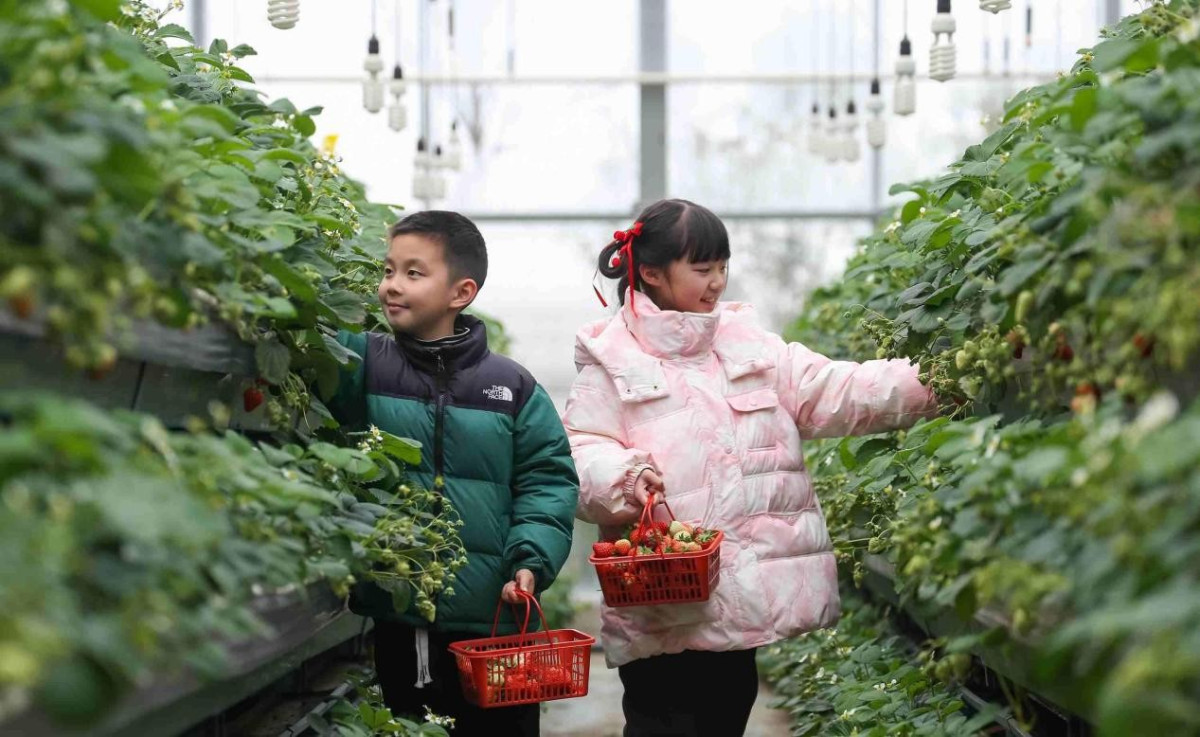
Children pick strawberries in a greenhouse in Jurong, east China's Jiangsu province. (Photo/Zhong Xueman)
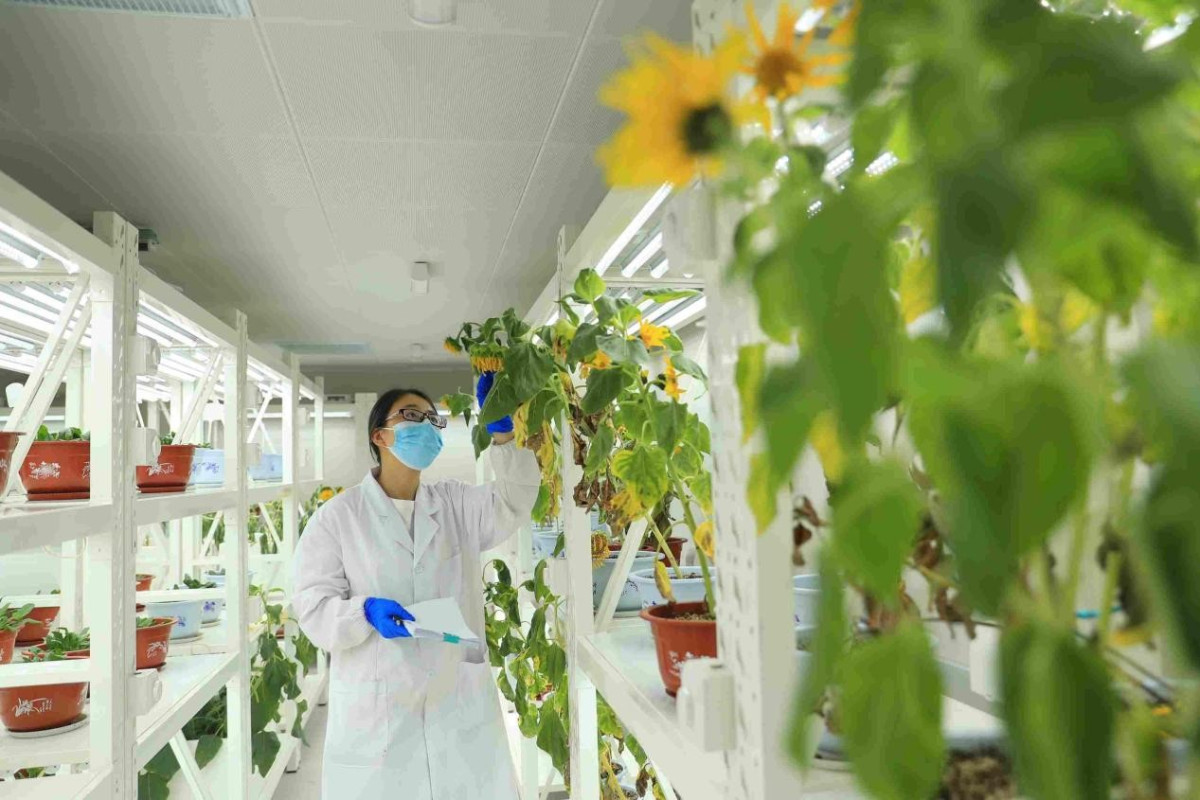
A researcher checks the growth of sunflowers in a laboratory of a seed technology company in Jiuquan, northwest China's Gansu province. (Photo/Chen Kun)
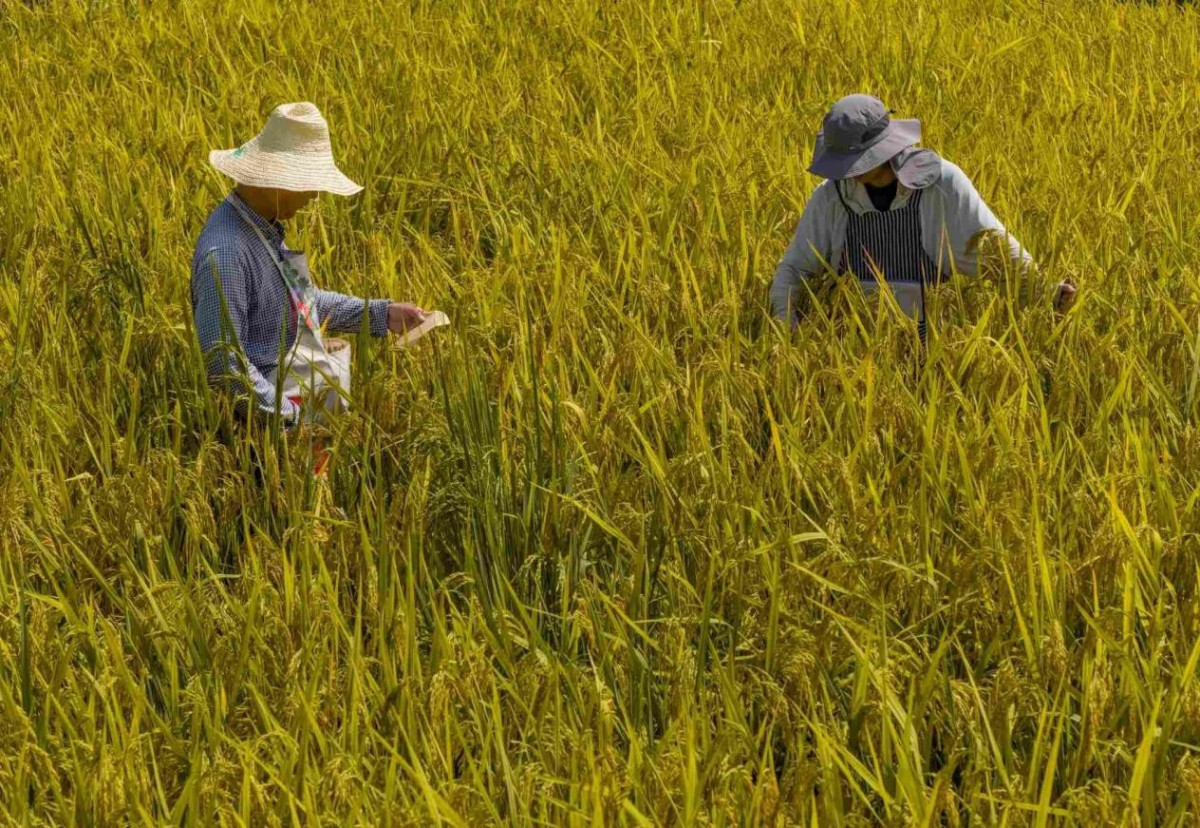
Agricultural researchers of Sichuan Agricultural University work in a paddy field. (Photo/Chen Xianlin)