





By Li Zheng,
In the frost-kissed expanse of Songyuan, Jilin province, the ancient tradition of ice fishing at Chagan Lake has thawed into something far grander: a cultural spectacle now luring urban travelers to China's northeastern frontier.
Yet the true marvel lies not merely in the tourists flocking to watch fishermen haul silver-scaled treasures through meter-thick ice, but in how these frozen harvests now glide seamlessly into kitchens thousands of miles away.
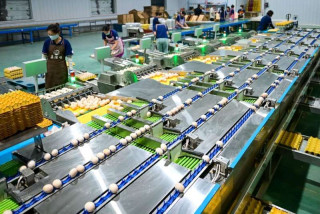
In the past, regional specialties once struggled to reach beyond local markets due to logistical constraints; today, a well-developed express delivery network ensures same-day and next-day delivery nationwide, allowing fresh catches from Chagan Lake to effortlessly "swim" their way into households across the country.
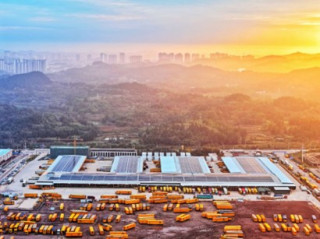
Last year, this machinery hummed to the tune of 170 billion parcels—a scale eclipsing all other nations for 11 consecutive years—transforming local catch into national commodities. The industry's impressive efficiency and prosperity are fueled by an increasingly mature logistics network and the steady development of a unified national market, reflecting the institutional advantages underpinning China's economic growth.
Through the lens of the "two sessions," the annual meetings of the China's top legislature, the National People's Congress, and top political consultative body, the National Committee of the Chinese People's Political Consultative Conference, institutional advantages of the socialist market economy have become even more evident.
Institutional advantages lie in the synergy between an efficient market and an effective government. Coordinating the "invisible hand" of the market with the "visible hand" of government is a global challenge - and a core issue in China's economic system reform.
A negative list has expanded market access; an online one-stop government service platform has streamlined administrative procedures; a single-visit approval process has improved government service efficiency.
Each of these steps represents significant progress in defining clearer boundaries between government and market forces, ensuring both vitality and oversight. The more standardized government actions become, the more effectively the market operates, which unleashes greater innovation and entrepreneurial drive.
Institutional advantages are also reflected in China's advanced macroeconomic management system, which offers stronger capabilities, more policy tools, and greater flexibility in the adaptation to changing economic conditions. This allows China to smooth out short-term fluctuations and enhance its resilience against external risks.
Over the past year, faced with a complex and challenging global landscape, China has decisively introduced a series of incremental policies.
To counterbalance sluggish domestic demand, the government has begun pumping fiscal stimulus into high-priority infrastructure arteries: projects tethered to national strategic pivots, critical supply-chain fortifications, and consumer trade-in programs paired with machinery upgrades. Each lever aims to rekindle investment cycles while nudging households toward spending.
To help businesses struggling with operational difficulties, financial institutions have been guided to increase support for the real economy, enabling enterprises to overcome obstacles and move forward.
Meanwhile, financial institutions, steered by policy algorithms, now deploy liquidity lifelines to firms navigating operational headwinds—a bid to stabilize the real economy's capillaries. These measures thread macro-scale ambition with micro-precision, steadying China's economy.
With the 14th Five-Year Plan nearing its denouement, the focus sharpens on transmuting systemic advantages into governance efficacy. By refining the molecular alignment of institutional DNA, China seeks not merely to weather economic turbulence but to recalibrate its growth trajectory toward more adaptive horizons.
 Couriers pack fresh catches from Chagan Lake. (Photo from Changchun Evening News)
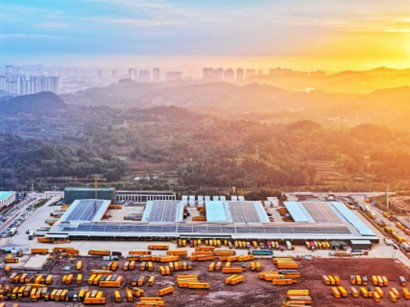
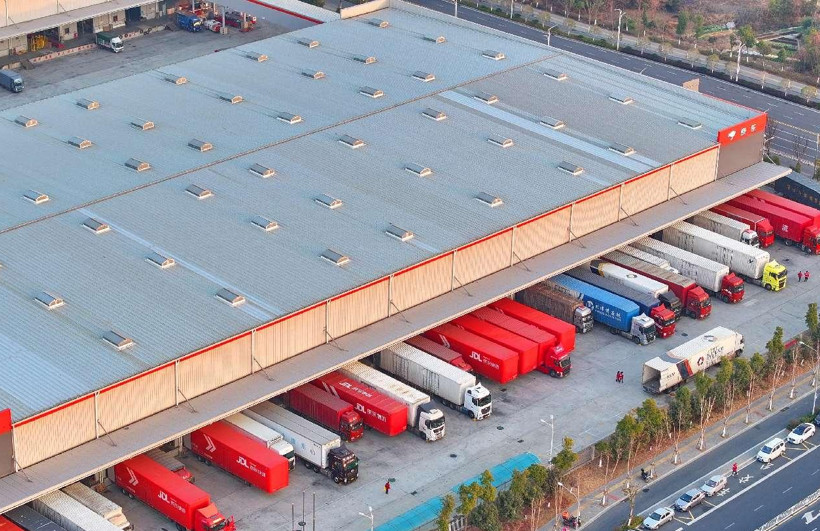 Trucks are loaded and about to departure from a logistics park in Nanchang, east China's Jiangxi province. (Photo by Zhu Haipeng/People's Daily Online)
 Citizens buy electric vehicles in a store in Suqian, east China's Jiangsu province, March 4, 2025. (Photo by Fang Dongxu/People's Daily Online)