









By Gao Qiao, Liu Yaoyang,
China's coffee industry has experienced significant growth in the past few years, leading to its emergence as a prominent player in the international coffee market.
According to data from the International Coffee Organization, China's annual coffee consumption has expanded by an average rate of more than 15 percent over the past decade.
Allegra World Coffee Portal, a leading information platform for the global coffee industry, said that China has overtaken the United States as the largest branded coffee shop market in the world after growing a whopping 58 percent in 2023.
Li Hong, vice president of Yunnan Agricultural University in Kunming, southwest China's Yunnan province, said that the explosive growth of the Chinese coffee industry is manifested in every link of the country's industrial chain.
In breeding and cultivation, China is rapidly developing superior domestic coffee varieties while also introducing high-quality foreign strains, to build a solid genetic foundation. Meanwhile, the country is applying modern agricultural technologies to coffee plantations, boosting the yield and quality of Chinese coffee.
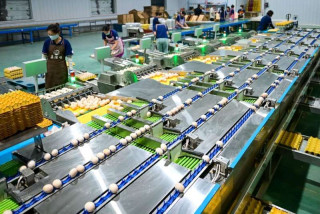
In coffee processing, China considers it important to promote and apply green and low-carbon technologies, striving to mitigate pollution during the early stages of coffee processing. For instance, Yunnan Agricultural University has developed an automatic production line that involves waterless skin removal and low-water degumming, resulting in lower pollution and water consumption.
Currently, new development models that integrate the entire coffee industrial chain are being explored across China, with the emergence of coffee estates being a particularly noteworthy trend.
Xinzhai village in Baoshan city, Yunnan province has employed a "coffee estate+" model, which facilitates coffee estates' cooperation with village committees, relevant research institutions, cooperatives and farmers. It helps impart new techniques to coffee growers, commercializes new research outcomes, and provides consumers with a one-stop "from seed to cup" experience of local coffee culture. This model not only increases income for coffee growers, but contributes to the vitalization of rural industries.
Li attributed the rapid development of the Chinese coffee industry to the country's huge domestic market. The shift in the consumption preferences of the young Chinese, their increased consumption ability, and the constant release of new coffee products are all creating new market opportunities.
Besides, China has continuously strengthened its innovation ability in coffee-related technologies, and made rapid progress in variety breeding, boutique coffee production and product innovation, laying a solid foundation for the quick advancement of the Chinese coffee industry, Li said. Coffee enterprises are also bringing forth new sales ideas and improving logistics services to expand their sales channels, he added.
Coffee-related organizations and renowned enterprises around the world are all optimistic about the potential of the Chinese market, and have lifted their input into it. The emerging chain coffee shops in different business forms and the launch of new brands and products have to a large extent promoted the consumption growth and cultural communication of coffee in China.
As international trade is more and more facilitated, a large quantity of raw materials including coffee beans are imported to China through different channels, offering strong support for the development of the coffee industry.
The competitiveness of the Chinese coffee industry is multifaceted. China presents a vast and lucrative market for coffee, with immense growth potential and robust consumer spending power.
Coffee-growing regions in the country enjoy natural advantages in coffee cultivation, and Yunnan province in particular, is quite a standout in this regard, accounting for 98 percent of the country's coffee planting area and producing 98 percent of the country's coffee yield, according to a 2023 report related to the development of coffee industry in Yunnan.
However, the Chinese coffee industry still faces development bottlenecks when compared to traditional coffee powerhouses overseas. For example, most coffee varieties still have to be imported, and there remains a notable gap between China's coffee production, processing technology and cutting-edge international standards. Besides, the branding and marketing capabilities of Chinese coffee enterprises still need to be improved.
An expert noted that China's unique consumer groups and consumption market of coffee products have shaped the country's own coffee culture that is more inclusive with Chinese characteristics.
China's coffee market holds enormous potential by tailoring products to diverse regional flavor preferences, developing a wide array of innovative offerings, and introducing more novel crossovers with Chinese styles, the expert added.
Looking ahead, China's coffee industry should further integrate all segments of its value chain while placing greater emphasis on consumer needs. By expanding the overall market, the industry can gradually achieve high-quality and sustainable development.
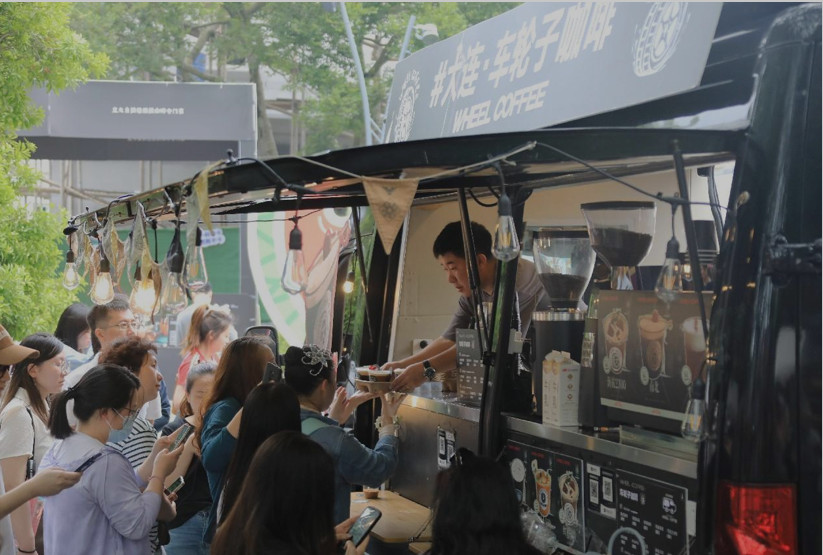 Tourists buy coffee in front of a stall during a coffee festival held in Zhoushan, east China's Zhejiang province, June 1, 2024. (Photo by Chen Yongjian/People's Daily Online)
 The China Kunshan International Fair for Coffee Industry 2024 is held in Kunshan, east China's Jiangsu province, May 16, 2024. (Photo by Zhang Feng/People's Daily Online)
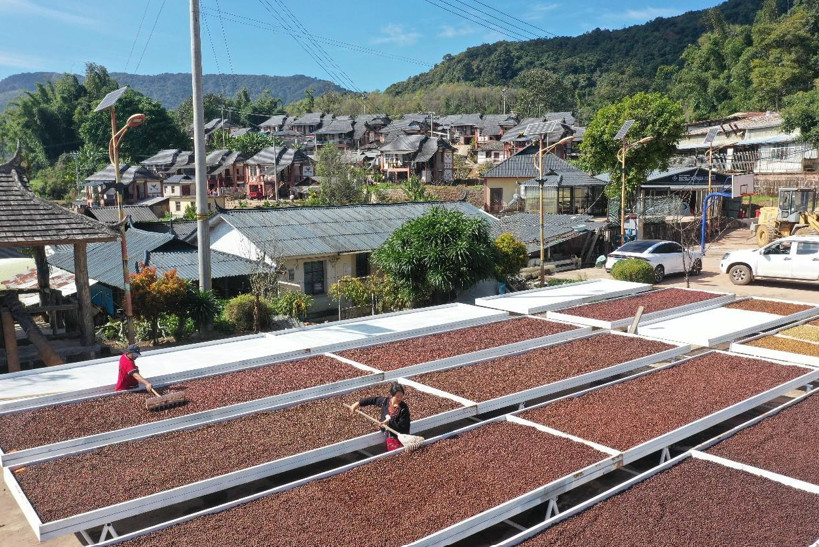 Villagers dry coffee beans in Mangmao village, Menglian county, southwest China's Yunnan province. (Photo by Liang Zhiqiang/People's Daily Online)